How Academic Support Centers Drive Student Success and Long-Term Achievement: A Complete Guide

Academic success is not determined solely by intelligence or classroom performance. Every student has unique learning styles, strengths, and challenges that influence their educational journey.
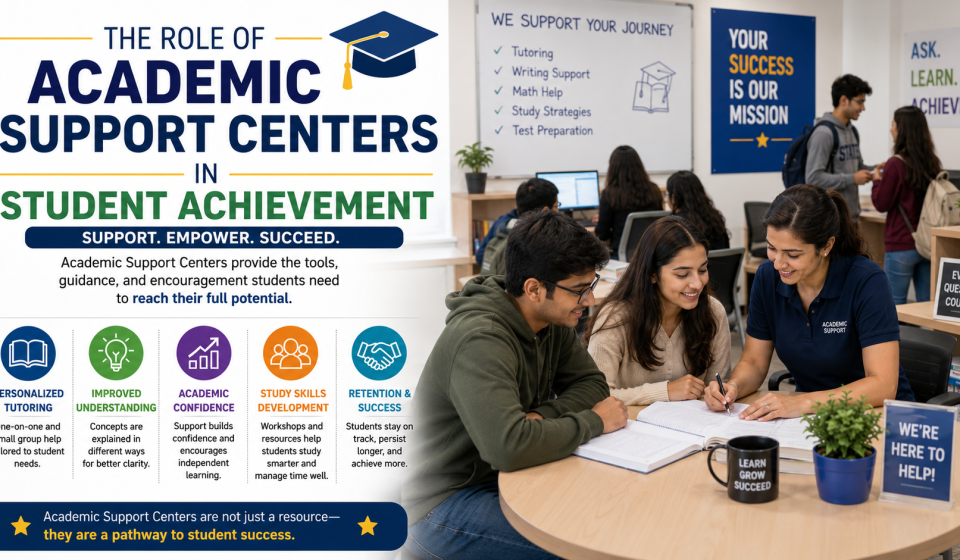
Modern colleges and universities recognize that student achievement extends beyond passing examinations. Higher education institutions increasingly invest in academic support centers that offer tutoring, mentoring, writing assistance, study skills workshops, career counseling, technology resources, and wellness support. By creating an environment focused on personalized learning and continuous improvement, academic support centers help students build confidence, improve academic performance, develop lifelong learning habits, and prepare for successful careers.
Understanding Academic Support Centers
Academic support centers are dedicated facilities within colleges and universities that provide additional educational assistance outside the traditional classroom. Their purpose is to help students succeed academically by offering personalized services that address different learning needs.
These centers often include:
- Tutoring services
- Writing assistance
- Mathematics support
- Science learning labs
- Language learning centers
- Academic advising
- Career counseling
- Study skills workshops
- Technology assistance
- Peer mentoring programs
Rather than replacing classroom instruction, academic support centers complement it by reinforcing concepts and helping students master difficult subjects.
Why Academic Support Centers Matter
Students enter higher education with different educational backgrounds, learning abilities, and academic experiences. Some adapt quickly, while others need additional support to transition into college-level learning.
Academic support centers help students:
- Improve understanding of course material
- Build confidence
- Develop effective study habits
- Reduce academic stress
- Increase motivation
- Strengthen critical thinking
- Improve grades
- Stay on track toward graduation
These services create equal learning opportunities for students from diverse backgrounds.
Personalized Learning Support
One of the greatest strengths of academic support centers is personalized instruction. Instead of large classroom settings, students receive individual attention tailored to their specific needs.
Personalized learning may involve:
- One-on-one tutoring
- Customized study plans
- Individual academic coaching
- Learning strategy development
- Goal setting
- Progress monitoring
This individualized approach often produces significant improvements in academic performance.
Tutoring Services Enhance Understanding
Tutoring is among the most valuable services offered by academic support centers.
Tutors assist students by:
- Explaining difficult concepts
- Reviewing classroom material
- Solving practice problems
- Preparing for examinations
- Improving homework performance
- Building subject confidence
Students frequently perform better when they receive additional explanations in a supportive environment.
Writing Centers Improve Communication Skills
Strong writing skills are essential across every academic discipline.
Writing centers help students:
- Organize essays
- Improve grammar
- Strengthen arguments
- Develop research papers
- Format academic citations
- Enhance professional writing
These services also prepare students for workplace communication.
Mathematics and Science Support
Many students struggle with quantitative subjects.
Academic support centers provide assistance in:
- Algebra
- Calculus
- Statistics
- Physics
- Chemistry
- Biology
- Engineering mathematics
Tutors simplify complex topics through practical explanations and guided practice.
Building Effective Study Habits
Academic achievement depends heavily on study strategies.
Support centers teach students how to:
- Create study schedules
- Take effective notes
- Prepare for exams
- Manage assignments
- Improve concentration
- Avoid procrastination
These habits benefit students throughout their educational and professional lives.
Time Management Skills
College students often balance academics, internships, extracurricular activities, and personal responsibilities.
Academic coaches help students:
- Prioritize tasks
- Set realistic goals
- Meet deadlines
- Reduce stress
- Improve productivity
- Maintain healthy routines
Effective time management contributes directly to academic success.
Academic Advising and Goal Setting
Academic advisors guide students throughout their educational journey.
They assist with:
- Course selection
- Degree planning
- Graduation requirements
- Academic policies
- Career pathways
- Transfer opportunities
Proper planning helps students avoid delays and maximize learning opportunities.
Peer Mentoring Programs
Peer mentors provide guidance based on their own academic experiences.
Mentoring benefits include:
- Emotional support
- Study advice
- Campus orientation
- Academic encouragement
- Social integration
- Confidence building
Students often feel more comfortable discussing challenges with experienced peers.
Supporting First-Year Students
The transition from school to college can be overwhelming.
Academic support centers ease this transition by offering:
- Orientation programs
- Learning workshops
- Freshman mentoring
- Academic coaching
- Campus resource guidance
Early support significantly improves student retention and success.
Helping Students Overcome Learning Challenges
Every learner experiences academic difficulties at some stage.
Support centers assist students who face:
- Poor academic performance
- Learning disabilities
- Language barriers
- Low confidence
- Examination anxiety
- Difficulty understanding course content
Targeted interventions help students overcome these challenges effectively.
Technology and Digital Learning Assistance
Modern education relies heavily on digital tools.
Academic support centers train students to use:
- Learning management systems
- Online research databases
- Presentation software
- Spreadsheet applications
- Citation management tools
- Collaborative learning platforms
Digital literacy has become essential for academic and career success.
Career Development Support
Many academic support centers work closely with career services.
Students receive assistance with:
- Resume writing
- Interview preparation
- Internship applications
- Career planning
- Professional networking
- Job search strategies
Academic achievement becomes more meaningful when connected to career goals.
Encouraging Independent Learning
Rather than providing answers, support centers teach students how to learn independently.
Students develop:
- Self-discipline
- Research abilities
- Critical thinking
- Analytical reasoning
- Problem-solving skills
These abilities encourage lifelong learning.
Reducing Academic Stress
Academic pressure can affect both performance and mental well-being.
Support centers help students manage stress through:
- Study planning
- Academic coaching
- Time management
- Peer encouragement
- Resource referrals
Lower stress levels often lead to improved academic outcomes.
Promoting Inclusive Education
Academic support centers ensure equal access to educational opportunities.
They support:
- International students
- First-generation college students
- Students with disabilities
- Working students
- Adult learners
- Students from diverse educational backgrounds
Inclusive services help every student succeed.
Developing Critical Thinking Skills
Students learn to analyze information rather than memorize it.
Activities include:
- Case studies
- Research discussions
- Problem-solving exercises
- Collaborative learning
- Reflective practice
Critical thinking prepares graduates for complex workplace challenges.
Collaboration with Faculty
Academic support centers often work alongside professors.
This collaboration allows:
- Early identification of struggling students
- Coordinated learning strategies
- Curriculum support
- Consistent academic guidance
Faculty recommendations frequently encourage students to seek additional support before academic problems become severe.
Monitoring Student Progress
Many centers track student development through:
- Academic assessments
- Learning analytics
- Progress reports
- Goal reviews
- Feedback sessions
Regular monitoring enables timely intervention and continuous improvement.
Building Student Confidence
Confidence plays a major role in academic achievement.
As students improve their understanding and performance, they become more willing to:
- Participate in discussions
- Ask questions
- Lead group projects
- Pursue internships
- Accept leadership roles
Confidence gained through academic support often extends beyond the classroom.
Long-Term Benefits of Academic Support Centers
Students who consistently use academic support services often experience:
- Higher grades
- Better retention rates
- Improved graduation outcomes
- Stronger communication skills
- Greater career readiness
- Increased self-confidence
- Enhanced problem-solving abilities
- Lifelong learning habits
These long-term benefits contribute to both personal and professional success.
The Future of Academic Support Centers
As higher education evolves, academic support centers continue expanding their services through technology and personalized learning.
Emerging trends include:
- AI-powered tutoring
- Virtual academic coaching
- Online writing assistance
- Digital study communities
- Learning analytics
- Personalized education plans
- Hybrid tutoring services
- Interactive learning platforms
These innovations will make academic support more accessible and effective for students worldwide.
Source
https://www.unesco.org
https://www.oecd.org/education
https://nces.ed.gov
https://www.naceweb.org
Conclusion
Academic support centers have become an essential component of student success in modern higher education. By offering personalized tutoring, academic advising, mentoring, writing assistance, study skills training, career guidance, and technology support, these centers empower students to overcome challenges and achieve their educational goals. Beyond improving grades, they foster confidence, independence, critical thinking, and lifelong learning habits that prepare students for successful careers. As education continues to evolve, academic support centers will remain at the heart of student achievement, ensuring that every learner has the opportunity to reach their full potential.
FAQ
Q1. What is an academic support center?
An academic support center is a college or university resource that provides tutoring, mentoring, academic advising, study skills training, writing assistance, and other services to help students succeed.
Q2. How do academic support centers improve student achievement?
They provide personalized guidance, tutoring, study strategies, and academic resources that help students understand course material, improve grades, and build confidence.
Q3. Who can use academic support center services?
Most colleges make these services available to all students, including first-year students, international students, working students, and those needing additional academic assistance.
Q4. Are tutoring services free in colleges?
Many colleges and universities offer free tutoring through their academic support centers as part of student support services.
Q5. What skills do students gain from academic support centers?
Students develop time management, critical thinking, communication, research, problem-solving, organization, and independent learning skills.
Q6. Do academic support centers help with career preparation?
Yes. Many centers provide resume assistance, interview preparation, internship guidance, career planning, and professional development workshops.
Q7. Can academic support centers reduce academic stress?
Yes. They help students improve study habits, manage workloads, develop confidence, and access resources that reduce stress and improve academic performance.
Q8. Why are academic support centers important in higher education?
They create an inclusive learning environment where every student receives the support needed to succeed academically, graduate successfully, and prepare for future careers.