How Academic Flexibility Benefits Modern Students: The Complete Guide to Personalized Learning, Career Readiness, and Student Success

Higher education has evolved significantly over the past decade to meet the changing needs of today’s students. Traditional education models that followed a fixed curriculum and rigid academic schedules are gradually being replaced by more flexible learning systems.
The growing demand for lifelong learning, digital transformation, and rapidly changing industries has made academic flexibility more important than ever. Employers increasingly value graduates who possess adaptability, critical thinking, interdisciplinary knowledge, and continuous learning skills. Flexible academic programs empower students to explore multiple disciplines, develop specialized expertise, participate in experiential learning, and prepare for careers that may not even exist today. Whether pursuing engineering, business, healthcare, arts, technology, or social sciences, students benefit from educational systems that encourage personalized learning paths. This comprehensive guide explains how academic flexibility supports student success, enhances career readiness, and prepares learners for the future of higher education.
What Is Academic Flexibility?
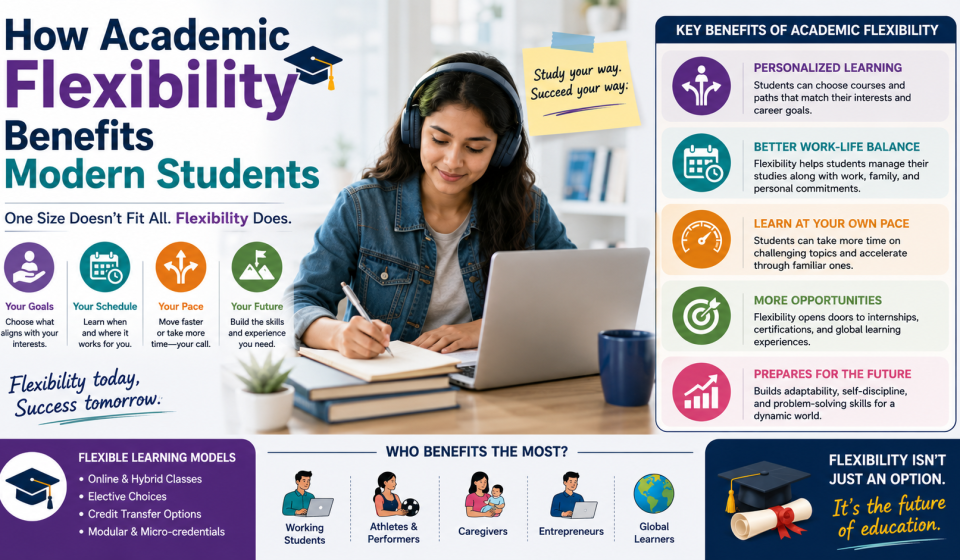
Academic flexibility refers to educational systems that allow students to personalize aspects of their learning experience according to their interests, goals, learning preferences, and career aspirations.
Academic flexibility may include:
- Elective courses
- Interdisciplinary learning
- Online and hybrid education
- Flexible class schedules
- Credit-based learning
- Internships
- Research opportunities
- Skill-based certifications
This approach supports individualized education.
Why Academic Flexibility Matters
Modern students have different goals, responsibilities, and learning styles.
Academic flexibility helps students:
- Learn at their own pace
- Balance multiple responsibilities
- Explore personal interests
- Improve engagement
- Develop career-relevant skills
- Adapt to changing industries
Flexible education creates more meaningful learning experiences.
Personalized Learning Paths
Students no longer need to follow identical educational journeys.
Flexible programs allow learners to:
- Choose electives
- Explore specialized subjects
- Combine multiple disciplines
- Focus on individual career interests
Personalized education increases motivation and satisfaction.
Encouraging Interdisciplinary Learning
Many modern careers require knowledge across multiple fields.
Students can combine subjects such as:
- Computer Science and Business
- Engineering and Artificial Intelligence
- Healthcare and Data Analytics
- Psychology and Marketing
- Environmental Science and Public Policy
Interdisciplinary learning supports innovative thinking.
Supporting Different Learning Styles
Every student learns differently.
Flexible education accommodates:
- Visual learners
- Auditory learners
- Reading and writing learners
- Hands-on learners
- Self-directed learners
Providing multiple learning methods improves understanding and participation.
Better Work-Life Balance
Many students manage responsibilities beyond academics.
Academic flexibility helps learners balance:
- Part-time employment
- Family responsibilities
- Internships
- Entrepreneurship
- Volunteer work
- Personal wellness
Balanced schedules support long-term success.
Online and Hybrid Learning Opportunities
Digital education has expanded access to learning.
Flexible options include:
- Live virtual classes
- Recorded lectures
- Online assignments
- Digital collaboration
- Virtual laboratories
Technology increases educational accessibility while maintaining academic quality.
Career-Focused Education
Flexible academic systems encourage practical learning.
Students can participate in:
- Internships
- Industry projects
- Research programs
- Skill development workshops
- Professional certifications
Career preparation becomes part of the educational journey.
Encouraging Lifelong Learning
Academic flexibility promotes continuous education beyond graduation.
Graduates can continue learning through:
- Micro-credentials
- Certificate programs
- Professional development courses
- Online learning platforms
Continuous learning supports long-term career growth.
Developing Critical Thinking
Flexible learning environments encourage students to:
- Analyze complex problems
- Evaluate multiple perspectives
- Develop independent opinions
- Apply knowledge creatively
Critical thinking remains one of the most valuable workplace skills.
Improving Student Engagement
Students are more motivated when they have choices in their education.
Greater flexibility encourages:
- Active participation
- Classroom discussions
- Project-based learning
- Independent research
- Collaborative learning
Engaged students often achieve better academic outcomes.
Supporting Innovation and Creativity
Flexible education encourages students to:
- Explore new ideas
- Design original projects
- Build prototypes
- Develop entrepreneurial solutions
- Participate in innovation competitions
Creativity drives both academic and professional success.
Academic Flexibility and Technology
Technology plays a major role in flexible education through:
- Learning management systems
- Virtual classrooms
- Artificial Intelligence learning tools
- Cloud collaboration platforms
- Digital libraries
- Online assessments
Technology expands access while supporting personalized learning.
Building Professional Skills
Academic flexibility helps students strengthen:
- Communication
- Leadership
- Collaboration
- Time management
- Adaptability
- Problem-solving
- Digital literacy
These transferable skills prepare students for diverse career opportunities.
Supporting Student Well-Being
Flexible academic environments help reduce unnecessary stress by allowing students to manage workloads more effectively.
Healthy educational practices include:
- Reasonable scheduling
- Academic advising
- Mental wellness support
- Study-life balance
- Flexible learning resources
Well-being contributes to improved academic performance.
Benefits for International Students
Academic flexibility supports international learners by providing:
- Diverse course options
- Language support services
- Online learning opportunities
- Cultural integration programs
- Personalized academic advising
These resources enhance the global learning experience.
Challenges of Academic Flexibility
While flexibility offers many advantages, students must also develop responsibility and self-discipline.
Success requires:
- Effective time management
- Goal setting
- Regular communication with advisors
- Consistent attendance
- Personal accountability
Freedom is most effective when combined with good planning.
The Role of Academic Advisors
Academic advisors help students make informed decisions about:
- Course selection
- Degree planning
- Career pathways
- Research opportunities
- Internship options
- Graduation requirements
Advising ensures students benefit fully from flexible educational systems.
The Future of Academic Flexibility
Higher education continues evolving through competency-based education, artificial intelligence, personalized learning platforms, digital credentials, virtual reality classrooms, and interdisciplinary degree programs. Future universities are expected to provide even greater flexibility by allowing students to customize learning experiences based on career goals, emerging technologies, and global workforce demands while maintaining high academic standards.
How Students Can Make the Most of Academic Flexibility
Students should take advantage of flexible learning opportunities by exploring electives, participating in internships, engaging in research, building professional networks, earning industry certifications, developing digital skills, and seeking academic advising regularly. Careful planning ensures flexibility becomes a tool for meaningful growth rather than unnecessary complexity.
Source
https://www.education.gov.in
https://www.ugc.gov.in
https://www.aicte-india.org
https://www.unesco.org
Conclusion
Academic flexibility has transformed modern higher education by giving students greater control over their learning experiences, career preparation, and personal development. Through personalized learning paths, interdisciplinary education, online learning opportunities, internships, research experiences, and skill-based training, flexible academic systems prepare students for a rapidly changing world. When combined with effective planning, self-discipline, and academic guidance, flexibility enhances engagement, encourages lifelong learning, and supports both academic excellence and professional success. As higher education continues to evolve, academic flexibility will remain a key factor in creating future-ready graduates who can adapt, innovate, and thrive in diverse careers.
FAQ
1. What is academic flexibility?
Academic flexibility is an educational approach that allows students to personalize their learning through elective courses, interdisciplinary programs, online learning, flexible schedules, internships, and skill-based experiences.
2. Why is academic flexibility important for modern students?
It helps students balance academics with personal responsibilities, explore career interests, develop practical skills, and adapt to changing educational and workplace demands.
3. Does academic flexibility improve career readiness?
Yes. Flexible programs encourage internships, research, certifications, project-based learning, and interdisciplinary education that strengthen employability and professional skills.
4. Can academic flexibility support different learning styles?
Absolutely. Flexible education provides multiple learning methods, including online resources, hands-on experiences, collaborative projects, and self-paced learning opportunities to accommodate diverse learning preferences.
5. What challenges come with academic flexibility?
Students may need strong time management, self-discipline, goal-setting, and regular communication with academic advisors to make the most of flexible learning opportunities.
6. How can students maximize the benefits of academic flexibility?
Students should plan their academic pathway carefully, choose courses aligned with their career goals, participate in internships and research, earn professional certifications, seek academic advising, and continuously develop new skills.