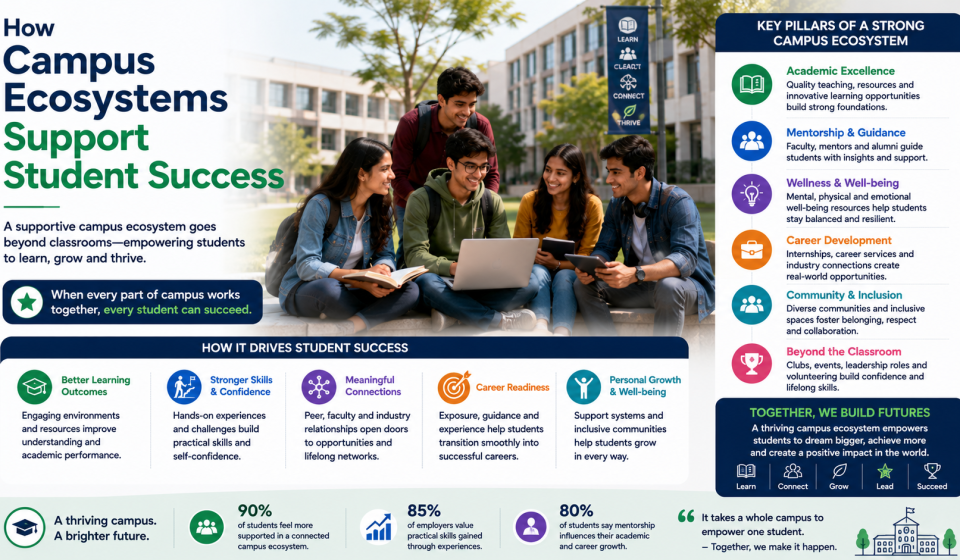

Success in higher education is influenced by much more than classroom lectures and examinations. While academic knowledge forms the foundation of learning, students also need access to supportive environments that encourage personal growth.
In today’s rapidly evolving educational landscape, colleges and universities are placing greater emphasis on building student-centred campuses that nurture holistic development. A positive campus ecosystem helps students develop confidence, leadership skills, communication abilities, emotional resilience, and professional readiness while fostering a sense of belonging and community. Whether through mentorship programmes, extracurricular activities, internship opportunities, wellness initiatives, or collaborative learning spaces, a supportive campus ecosystem plays a crucial role in shaping successful graduates who are prepared for lifelong learning and rewarding careers.
What Is a Campus Ecosystem?
A campus ecosystem is the complete environment that supports students throughout their educational journey. It includes academic resources, physical infrastructure, digital technologies, student organisations, faculty support, healthcare services, career guidance, innovation centres, and community engagement opportunities.
Rather than focusing only on classroom education, a campus ecosystem ensures that students receive comprehensive support for their academic, personal, emotional, and professional development.
A strong campus ecosystem typically includes:
- Academic departments
- Libraries and digital learning resources
- Student clubs and societies
- Career development centres
- Sports and recreation facilities
- Innovation and entrepreneurship centres
- Mental health and counselling services
- Alumni networks
- Industry partnerships
- Campus technology infrastructure
Together, these elements create a learning environment where students can achieve their full potential.
Why Campus Ecosystems Matter
Students spend several years in higher education, making the campus environment an important part of their growth.
A healthy campus ecosystem helps students:
- Perform better academically
- Build professional skills
- Develop confidence
- Form lasting relationships
- Improve emotional well-being
- Prepare for successful careers
- Become responsible citizens
It transforms education into a complete developmental experience rather than simply earning a degree.
Creates a Positive Learning Environment
An encouraging campus environment motivates students to learn more effectively.
Supportive learning spaces include:
- Modern classrooms
- Digital laboratories
- Interactive learning spaces
- Quiet study areas
- Collaborative workspaces
- Technology-enabled classrooms
Comfortable learning environments improve concentration, creativity, and academic performance.
Encourages Academic Excellence
Academic success depends on access to quality educational resources.
Strong campuses provide:
- Qualified faculty
- Academic mentoring
- Tutoring programmes
- Research facilities
- Online learning resources
- Study workshops
These resources help students overcome challenges and achieve better results.
Supports Personal Growth
College is also a time for discovering personal strengths.
Campus ecosystems encourage students to develop:
- Self-confidence
- Emotional intelligence
- Independence
- Responsibility
- Decision-making skills
- Resilience
Personal growth contributes to lifelong success beyond academics.
Builds Strong Student Communities
Feeling connected improves student engagement and satisfaction.
Campus communities develop through:
- Student organisations
- Cultural festivals
- Volunteer programmes
- Orientation events
- Peer mentoring
- Social activities
Belonging to a supportive community reduces isolation and enhances the overall college experience.
Provides Career Development Support
Career preparation begins long before graduation.
Effective career centres offer:
- Career counselling
- Resume writing assistance
- Interview preparation
- Internship guidance
- Placement support
- Networking opportunities
These services increase graduate employability.
Encourages Leadership Development
Leadership opportunities help students prepare for future responsibilities.
Examples include:
- Student government
- Club leadership
- Event management
- Volunteer coordination
- Entrepreneurship programmes
Leadership experiences build confidence and decision-making abilities.
Promotes Innovation and Entrepreneurship
Many universities encourage innovation through specialised facilities.
Students benefit from:
- Startup incubators
- Innovation labs
- Hackathons
- Business competitions
- Research centres
- Product development workshops
Innovation ecosystems inspire creativity and entrepreneurial thinking.
Strengthens Mental Health and Well-Being
Student well-being directly affects academic success.
Comprehensive support includes:
- Professional counselling
- Stress management workshops
- Wellness programmes
- Peer support groups
- Mental health awareness campaigns
Healthy students are more engaged, productive, and resilient.
Encourages Physical Fitness
Physical wellness contributes to better academic performance and emotional health.
Quality campuses provide:
- Sports facilities
- Fitness centres
- Yoga sessions
- Recreational clubs
- Outdoor activities
Regular physical activity improves concentration and reduces stress.
Enhances Digital Learning
Technology has become an essential part of education.
Modern campus ecosystems include:
- High-speed internet
- Learning Management Systems (LMS)
- Smart classrooms
- Online libraries
- Cloud collaboration tools
- AI-powered learning platforms
Digital resources improve accessibility and learning flexibility.
Develops Communication Skills
Students regularly improve communication through:
- Classroom discussions
- Presentations
- Group assignments
- Student organisations
- Public speaking competitions
- Debate clubs
Strong communication skills are valuable in every profession.
Encourages Teamwork and Collaboration
Professional success depends on collaboration.
Campus activities teach students to:
- Work in teams
- Resolve conflicts
- Share responsibilities
- Respect diverse perspectives
- Achieve shared goals
Collaborative learning reflects real workplace environments.
Supports Diversity and Inclusion
Inclusive campuses create welcoming environments for students from different backgrounds.
Diversity initiatives promote:
- Cultural understanding
- Equal opportunities
- Inclusive learning
- Mutual respect
- Global perspectives
Students become better prepared for multicultural workplaces.
Connects Students with Industry
Industry partnerships create practical learning opportunities.
Students gain access to:
- Internships
- Guest lectures
- Industrial visits
- Live business projects
- Professional mentoring
- Campus recruitment
These experiences improve career readiness.
Strengthens Alumni Connections
Successful alumni contribute to student success by offering:
- Career advice
- Networking opportunities
- Internship referrals
- Industry insights
- Mentorship programmes
Strong alumni networks often improve employment opportunities.
Encourages Community Engagement
Campus ecosystems extend beyond institutional boundaries.
Students participate in:
- Social service
- Environmental initiatives
- Community outreach
- Rural development projects
- Awareness campaigns
Community engagement develops empathy, leadership, and civic responsibility.
Supports Lifelong Learning
Learning continues beyond graduation.
Campuses encourage lifelong education through:
- Professional certifications
- Continuing education programmes
- Online learning resources
- Alumni learning initiatives
- Industry training
Continuous learning helps graduates remain competitive.
Common Characteristics of Successful Campus Ecosystems
Leading educational institutions often share several characteristics:
- Student-centred teaching
- Modern infrastructure
- Industry partnerships
- Active student organisations
- Research opportunities
- Career services
- Wellness support
- Inclusive campus culture
- Technology integration
- Strong alumni engagement
These qualities create environments where students thrive.
Challenges in Building Strong Campus Ecosystems
Institutions may encounter challenges such as:
- Limited funding
- Outdated infrastructure
- Technology gaps
- Insufficient student support services
- Weak industry collaboration
- Resource constraints
Continuous investment and innovation help overcome these obstacles.
Tips for Students to Make the Most of Their Campus Ecosystem
Students should actively participate in campus life by:
- Joining student clubs
- Attending workshops
- Building relationships with faculty
- Using career services
- Participating in internships
- Volunteering for community projects
- Using library resources
- Seeking mentorship
- Attending networking events
- Prioritising personal well-being
Active participation leads to a richer educational experience.
Future Trends in Campus Ecosystems
The future of higher education will feature even more integrated and technology-driven campuses.
Emerging trends include:
- Artificial Intelligence learning assistants
- Smart campuses
- Hybrid learning environments
- Virtual reality classrooms
- Personalised learning analytics
- Sustainability initiatives
- Digital student services
- Global virtual collaboration
These innovations will continue enhancing student experiences.
Long-Term Benefits of a Strong Campus Ecosystem
Students who study in supportive campus environments often experience:
- Better academic performance
- Higher graduation rates
- Stronger employability
- Greater leadership abilities
- Improved emotional well-being
- Enhanced communication skills
- Expanded professional networks
- Increased confidence
- Lifelong learning habits
- Greater career success
A positive campus ecosystem creates graduates who are prepared to excel in every stage of life.
Source
https://www.unesco.org
https://www.oecd.org
https://www.weforum.org
https://www.aacu.org
Conclusion
A strong campus ecosystem is one of the most valuable assets a college or university can offer its students. By combining high-quality academics with career services, mentorship, innovation opportunities, extracurricular activities, wellness programmes, and inclusive communities, institutions create an environment where students can grow intellectually, socially, emotionally, and professionally. These interconnected resources ensure that students are not only successful in their studies but also develop the confidence, resilience, leadership, and practical skills needed to navigate an increasingly competitive global workforce.
As higher education continues to evolve, the importance of building student-centred campus ecosystems will only increase. Colleges that invest in technology, industry partnerships, research opportunities, mental health support, and personalised learning experiences prepare graduates for lifelong success rather than just employment. For students, actively engaging with every aspect of the campus ecosystem—from clubs and internships to career centres and mentorship programmes—can significantly enhance academic achievements, expand professional networks, and lay the foundation for meaningful careers and continuous personal development.
FAQ
1. What is a campus ecosystem?
A campus ecosystem is the complete network of academic, social, technological, career, wellness, and support services within a college or university that helps students succeed in their educational and professional journeys.
2. Why is a campus ecosystem important for student success?
A strong campus ecosystem supports academic learning, personal growth, career readiness, mental well-being, leadership development, and community engagement, helping students achieve success in multiple areas of life.
3. What are the main components of a campus ecosystem?
Key components include academic departments, libraries, student clubs, career centres, sports facilities, counselling services, innovation hubs, technology infrastructure, alumni networks, and industry partnerships.
4. How do campus ecosystems improve career opportunities?
They provide internships, placement assistance, career counselling, networking events, industry collaborations, mentoring programmes, and skill development workshops that enhance employability.
5. How does campus life contribute to holistic student development?
Campus life encourages students to participate in extracurricular activities, leadership roles, volunteering, sports, cultural programmes, and collaborative learning experiences that build confidence and life skills.
6. What role does technology play in a campus ecosystem?
Technology supports digital learning through smart classrooms, online libraries, learning management systems, AI-powered educational tools, cloud collaboration platforms, and virtual learning environments.
7. How can students make the most of a campus ecosystem?
Students should actively join clubs, attend workshops, seek mentorship, participate in internships, use career services, volunteer in community programmes, and engage in networking opportunities.
8. What is the biggest benefit of a strong campus ecosystem?
The greatest benefit is providing students with a supportive environment that combines academic excellence, practical experience, personal development, career preparation, and lifelong learning opportunities.