
Education has evolved significantly over the past decade, moving beyond the traditional classroom model to embrace more flexible and student-centred approaches.
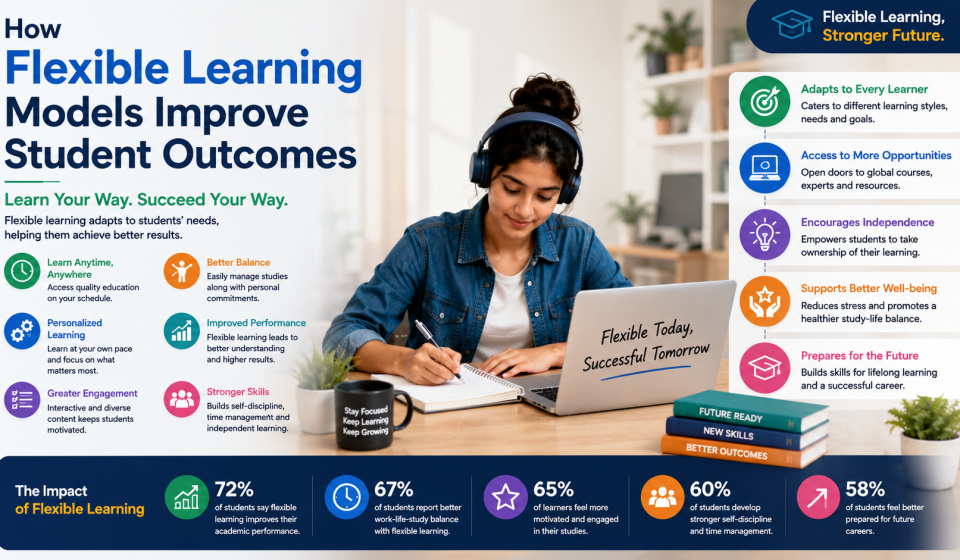
In today’s rapidly changing world, flexibility in education is no longer a luxury—it has become a necessity. Students come from diverse backgrounds, possess different learning styles, and face varying personal, financial, and professional commitments. Flexible learning models address these differences by offering multiple ways to access educational content, interact with instructors, and demonstrate knowledge. Whether through online courses, blended learning, competency-based education, or self-paced programmes, flexible learning helps students achieve better outcomes by making education more accessible, inclusive, and effective.
What Are Flexible Learning Models?
Flexible learning models are educational approaches that allow students greater control over when, where, how, and sometimes even what they learn. Instead of following a rigid schedule or relying solely on face-to-face classroom instruction, students can access learning resources through various formats that fit their individual needs.
Common flexible learning models include:
- Online learning
- Hybrid learning
- Blended learning
- Self-paced learning
- Competency-based education
- Flipped classrooms
- Microlearning
- Distance education
- Mobile learning
- Project-based learning
These models focus on creating personalised and engaging learning experiences while maintaining academic standards.
Why Flexible Learning Is Becoming More Important
The modern world demands continuous learning and adaptability. Students often balance academics with internships, part-time jobs, extracurricular activities, and family responsibilities.
Flexible learning addresses these challenges by allowing students to:
- Study according to their schedule
- Access learning from any location
- Review lessons multiple times
- Learn at their own pace
- Balance education with other commitments
- Develop digital skills
As technology continues to evolve, flexible education is becoming a key part of modern learning systems worldwide.
Improves Access to Education
One of the greatest advantages of flexible learning is increased accessibility.
Students living in rural areas, working professionals, individuals with disabilities, and those facing financial or geographical challenges can access quality education without relocating.
Flexible learning reduces barriers by providing:
- Online lectures
- Digital textbooks
- Recorded classes
- Virtual classrooms
- Cloud-based learning resources
This expands educational opportunities for a broader range of learners.
Supports Different Learning Styles
Every student learns differently.
Flexible learning accommodates visual, auditory, reading, writing, and kinaesthetic learners through various teaching methods.
Examples include:
- Video lectures
- Interactive quizzes
- Podcasts
- Infographics
- E-books
- Live discussions
- Practical assignments
Students can choose the resources that best match their learning preferences.
Encourages Self-Paced Learning
Not all students understand concepts at the same speed.
Self-paced learning allows students to:
- Spend more time on difficult topics
- Skip concepts they already understand
- Review lessons whenever needed
- Learn without unnecessary pressure
This personalised approach often leads to deeper understanding and improved retention.
Improves Student Engagement
Interactive learning keeps students actively involved in the educational process.
Flexible learning often includes:
- Discussion forums
- Interactive simulations
- Group projects
- Online collaboration
- Gamified learning
- Real-world case studies
Active participation increases motivation and improves learning outcomes.
Enhances Academic Performance
Students who can access learning materials anytime often perform better academically.
Benefits include:
- Better revision opportunities
- Reduced learning gaps
- Improved understanding
- Increased confidence
- Better examination preparation
Students can revisit recorded lectures and additional resources whenever needed.
Develops Independent Learning Skills
Flexible learning encourages students to take responsibility for their education.
Students develop:
- Self-discipline
- Time management
- Goal setting
- Accountability
- Research skills
- Critical thinking
These abilities remain valuable throughout academic and professional life.
Supports Better Work-Life Balance
Many students manage multiple responsibilities.
Flexible learning helps balance:
- College classes
- Part-time jobs
- Family commitments
- Internships
- Professional certifications
- Personal development
This flexibility reduces stress while supporting academic progress.
Promotes Lifelong Learning
Learning no longer ends with graduation.
Flexible education encourages continuous learning through:
- Professional certifications
- Online courses
- Industry training
- Skill development programmes
- Micro-credentials
Professionals can continue improving their knowledge without interrupting their careers.
Integrates Technology into Education
Technology plays a central role in flexible learning.
Students gain experience using:
- Learning Management Systems (LMS)
- Video conferencing platforms
- Cloud collaboration tools
- Digital note-taking applications
- AI-powered learning assistants
- Online assessment platforms
These digital skills are increasingly valuable in today’s workplace.
Improves Collaboration
Flexible learning is not limited to independent study.
Students collaborate through:
- Virtual classrooms
- Group assignments
- Online discussion boards
- Collaborative documents
- Peer learning activities
Working with classmates develops teamwork and communication skills.
Encourages Personalised Learning
Students have different strengths, weaknesses, and career goals.
Flexible learning allows individuals to personalise:
- Learning pace
- Course selection
- Study schedule
- Assessment methods
- Learning resources
Personalisation improves both engagement and academic success.
Reduces Learning Anxiety
Traditional classrooms may create pressure for some students.
Flexible learning allows learners to:
- Review difficult topics privately
- Participate comfortably online
- Learn without constant comparison
- Prepare before discussions
Reduced anxiety often improves confidence and participation.
Supports Inclusive Education
Flexible education benefits diverse student populations, including:
- Students with disabilities
- Adult learners
- International students
- Working professionals
- Parents returning to education
Providing multiple learning options promotes educational equity and inclusion.
Encourages Practical Skill Development
Modern flexible programmes often emphasise real-world application.
Students gain practical experience through:
- Industry projects
- Virtual laboratories
- Simulations
- Internships
- Portfolio development
- Capstone projects
Hands-on learning improves job readiness.
Flexible Learning and Career Preparation
Employers increasingly value graduates who are adaptable and digitally skilled.
Flexible learning helps students develop:
- Digital literacy
- Independent problem-solving
- Communication skills
- Remote collaboration
- Project management
- Adaptability
These competencies prepare students for modern workplaces.
Challenges of Flexible Learning
Although flexible learning offers many benefits, students may face challenges such as:
- Poor time management
- Internet connectivity issues
- Reduced face-to-face interaction
- Digital distractions
- Lack of self-motivation
These challenges can be addressed through structured planning, supportive instructors, and effective learning strategies.
Tips for Succeeding in Flexible Learning
Students can maximise success by:
- Creating a study schedule
- Setting realistic goals
- Participating actively in discussions
- Limiting distractions
- Reviewing lessons regularly
- Asking instructors for clarification
- Using productivity tools
- Maintaining a healthy study-life balance
Consistency is the key to successful flexible learning.
The Future of Flexible Learning
The future of education will continue to combine technology with personalised learning experiences.
Emerging trends include:
- Artificial Intelligence tutors
- Adaptive learning platforms
- Virtual Reality classrooms
- Augmented Reality simulations
- Learning analytics
- Personalised digital learning paths
- Micro-credentials
- Global online classrooms
These innovations will make education even more accessible, engaging, and effective.
Long-Term Benefits of Flexible Learning
Students who embrace flexible learning often experience:
- Higher academic achievement
- Better time management
- Increased confidence
- Improved digital literacy
- Greater career readiness
- Enhanced problem-solving abilities
- Stronger independent learning habits
- Better work-life balance
- Increased lifelong learning opportunities
- Improved employability
These long-term advantages prepare students for success in higher education, professional careers, and continuous personal development.
Source
https://www.unesco.org
https://www.oecd.org
https://www.edx.org
https://www.coursera.org
https://www.weforum.org
https://www.educause.edu
https://www.microsoft.com/education
Conclusion
Flexible learning models are transforming education by making learning more accessible, personalised, and student-centred. By allowing learners to study at their own pace, choose learning methods that suit their individual needs, and access educational resources anytime and anywhere, flexible education creates opportunities for greater academic success and personal growth. It supports students from diverse backgrounds, encourages lifelong learning, and develops essential skills such as time management, digital literacy, critical thinking, and adaptability that are highly valued in today’s evolving workforce.
As technology continues to reshape education, flexible learning will play an increasingly important role in preparing students for future careers and lifelong success. Whether through online courses, hybrid classrooms, competency-based programmes, or self-paced learning, these innovative models empower students to take ownership of their education while balancing academic, personal, and professional responsibilities. By embracing flexible learning, students can improve their academic outcomes, strengthen their career prospects, and build the confidence needed to thrive in a rapidly changing world.
FAQ
1. What are flexible learning models?
Flexible learning models are educational approaches that allow students to choose when, where, and how they learn through methods such as online learning, blended learning, hybrid education, self-paced courses, and competency-based programmes.
2. Why are flexible learning models important?
They make education more accessible, support different learning styles, improve student engagement, encourage independent learning, and help learners balance education with personal and professional responsibilities.
3. How does flexible learning improve student outcomes?
Flexible learning improves outcomes by increasing accessibility, allowing personalised learning, enhancing academic performance, strengthening digital skills, and promoting better time management and self-discipline.
4. What are the different types of flexible learning?
Common models include online learning, blended learning, hybrid learning, flipped classrooms, self-paced learning, competency-based education, mobile learning, and project-based learning.
5. Can flexible learning help working students?
Yes. Flexible learning enables students to study around work schedules, family commitments, internships, and other responsibilities without compromising their education.
6. What skills do students develop through flexible learning?
Students develop digital literacy, communication, collaboration, critical thinking, time management, self-motivation, adaptability, and problem-solving skills.
7. Are there any challenges associated with flexible learning?
Some challenges include staying motivated, managing time effectively, avoiding digital distractions, and ensuring reliable internet access. However, these challenges can be overcome with proper planning and discipline.
8. What is the biggest advantage of flexible learning?
The biggest advantage is giving students greater control over their learning experience while improving accessibility, academic performance, career readiness, and lifelong learning opportunities.