Essential Questions Every Student Should Ask Before College Admission: The Ultimate 2026 Guide to Making the Right College Choice

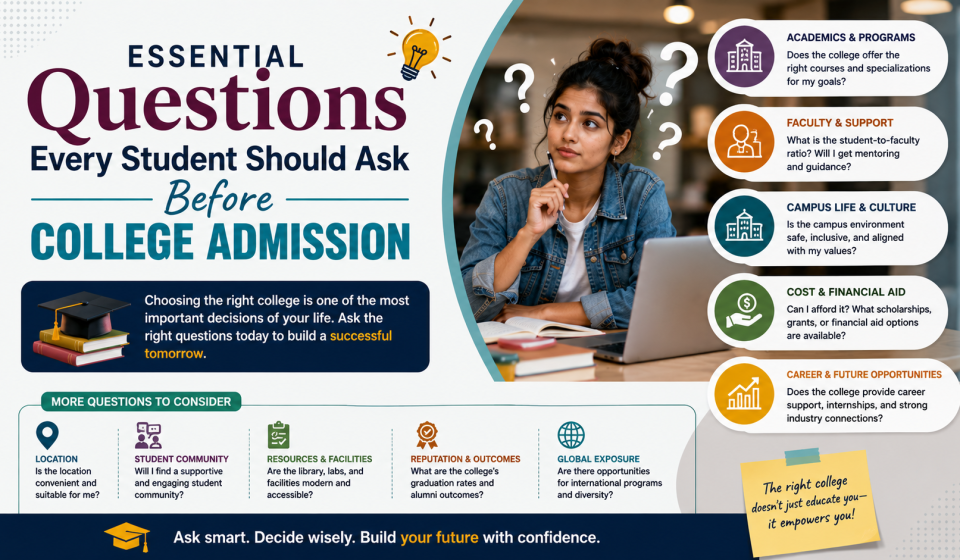
Choosing the right college is one of the biggest decisions a student will make. The institution you select will influence your academic growth, career opportunities.
In 2026, higher education is evolving rapidly. Artificial Intelligence (AI), digital learning platforms, multidisciplinary education, industry collaboration, internships, entrepreneurship, research, and flexible learning pathways are changing how colleges prepare students for future careers. Employers today expect graduates to possess not only academic knowledge but also practical experience, communication skills, adaptability, leadership, and problem-solving abilities. Therefore, students must evaluate colleges carefully before taking admission.
Is the College Properly Recognized and Accredited?
Start by asking:
- Is the college approved by UGC?
- Is AICTE approval applicable?
- What is the NAAC accreditation grade?
- Does the program have NBA accreditation where relevant?
Accreditation reflects educational quality and credibility.
How Qualified Is the Faculty?
Ask about:
- Faculty qualifications
- Industry experience
- Teaching methods
- Student mentorship
- Research involvement
Experienced faculty improve learning outcomes.
Is the Curriculum Updated Regularly?
Students should know:
- How frequently courses are updated
- Whether industry experts contribute to curriculum design
- If emerging technologies are included
- Whether practical learning is emphasized
A modern curriculum prepares students for future careers.
What Internship Opportunities Are Available?
Ask:
- Are internships mandatory?
- Which companies collaborate with the college?
- Are internships paid?
- Does the placement cell assist students?
Internships build practical experience.
What Is the Placement Support Like?
Important questions include:
- Which companies visit campus?
- What placement training is provided?
- Are mock interviews conducted?
- What career guidance services are available?
Placement support significantly impacts career success.
Are There Industry Collaborations?
Look for information about:
- Corporate partnerships
- Guest lectures
- Live projects
- Industrial visits
- Professional workshops
Industry exposure improves employability.
What Student Support Services Are Offered?
Ask whether the college provides:
- Academic counseling
- Career mentoring
- Mental wellness services
- Financial guidance
- Skill development programs
Support services enhance overall student success.
What Are the Campus Learning Facilities?
Evaluate:
- Smart classrooms
- Laboratories
- Libraries
- Digital learning platforms
- Internet connectivity
Modern infrastructure improves educational quality.
Are There Opportunities Beyond Academics?
Students should ask about:
- Student clubs
- Sports
- Cultural activities
- Leadership programs
- Entrepreneurship cells
Holistic development strengthens professional profiles.
How Active Is the Alumni Network?
An active alumni network provides:
- Career guidance
- Internship referrals
- Industry networking
- Mentorship
- Professional opportunities
Successful alumni indicate institutional strength.
What Is the Campus Environment Like?
Important considerations include:
- Campus safety
- Student diversity
- Faculty accessibility
- Learning culture
- Inclusiveness
A healthy environment promotes better learning.
Is Academic Flexibility Available?
Under NEP 2020, students should ask about:
- Elective courses
- Minor specializations
- Credit transfer
- Multidisciplinary learning
- Multiple entry and exit options
Academic flexibility supports personalized education.
What Are the Total Costs?
Understand:
- Tuition fees
- Hostel charges
- Examination fees
- Scholarships
- Financial aid
Clear financial planning prevents future stress.
Can Current Students Share Their Experience?
Speaking with current students helps you understand:
- Teaching quality
- Campus culture
- Faculty support
- Placement preparation
- Student satisfaction
Real experiences provide valuable insights.
Common Admission Mistakes to Avoid
Avoid:
- Choosing only based on rankings
- Following friends blindly
- Ignoring accreditation
- Overlooking career services
- Believing marketing claims without verification
- Not visiting the campus if possible
Careful research leads to better decisions.
Source
https://www.education.gov.in
https://www.ugc.gov.in
https://www.aicte-india.org
https://www.naac.gov.in
https://www.abc.gov.in
Conclusion
Asking the right questions before college admission is one of the smartest investments a student can make in their future. A college should be evaluated not only for its reputation but also for its academic quality, faculty expertise, practical learning opportunities, career support, infrastructure, student services, campus environment, industry exposure, and academic flexibility. By conducting thorough research and seeking honest answers, students can confidently choose an institution that aligns with their educational goals and long-term career aspirations. In an era shaped by NEP 2020, technological advancement, and evolving employer expectations, informed decision-making ensures that students receive not just a degree but a meaningful educational experience that prepares them for lifelong success.
FAQ
1. Why is it important to ask questions before taking college admission?
Asking questions helps students evaluate academic quality, faculty, placements, internships, infrastructure, student support, and career opportunities, leading to a more informed admission decision.
2. What is the first question students should ask before choosing a college?
Students should first verify whether the college is recognized by the appropriate regulatory authorities and holds valid accreditation for its academic programs.
3. Why should students evaluate internship opportunities before admission?
Internships provide practical experience, industry exposure, workplace skills, and networking opportunities that improve employability after graduation.
4. How does faculty quality influence student success?
Experienced faculty provide effective teaching, academic mentoring, research guidance, career advice, and practical industry insights that enhance student learning.
5. Why is academic flexibility important under NEP 2020?
Academic flexibility allows students to choose electives, pursue multidisciplinary education, transfer credits where applicable, and personalize their learning journey.
6. How important are student support services in higher education?
Academic counseling, career guidance, mental wellness support, mentorship, and skill development programs help students overcome challenges and achieve academic and professional success.
7. Should placement records be the only factor when comparing colleges?
No. Students should also evaluate accreditation, curriculum quality, faculty expertise, campus environment, internships, research opportunities, industry collaborations, and student support services.
8. How can students verify information provided by colleges?
Students should check official regulatory websites, review institutional documents, visit campuses if possible, speak with current students and alumni, and compare information from multiple reliable sources before making a final decision.