Choosing the Right Learning Environment for Long-Term Career Success: The Ultimate Guide to Selecting a College That Shapes Your Future

Selecting the right college is one of the most important decisions a student will ever make. While many students focus on rankings, tuition fees, campus size, or popularity, the learning environment is often the factor that has the greatest impact on academic performance.
The modern workplace demands far more than academic qualifications. Employers seek graduates who can think critically, solve complex problems, communicate effectively, work in diverse teams, adapt to technological changes, and continuously learn new skills. Colleges that provide a supportive and future-focused learning environment help students develop these competencies through interactive teaching methods, industry exposure, research opportunities, internships, mentorship programs, digital learning, and experiential education.
Why the Learning Environment Matters
The learning environment influences every aspect of a student’s educational journey.
A supportive environment promotes:
- Academic excellence
- Personal growth
- Career readiness
- Innovation
- Confidence
- Lifelong learning
Students perform better when they feel motivated and supported.
Student-Centered Teaching
Top colleges focus on active learning rather than passive lectures.
Modern teaching methods include:
- Interactive discussions
- Project-based learning
- Case studies
- Practical sessions
- Collaborative learning
- Technology-enabled education
These approaches improve understanding and engagement.
Experienced Faculty
Qualified faculty members contribute by providing:
- Subject expertise
- Research guidance
- Career mentoring
- Individual academic support
- Industry knowledge
Accessible professors help students maximize their potential.
Practical Learning Opportunities
Learning should extend beyond textbooks.
Look for colleges offering:
- Laboratory work
- Live projects
- Industrial visits
- Field studies
- Simulations
- Internship programs
Practical experience strengthens professional skills.
Strong Industry Exposure
Industry collaboration allows students to:
- Understand workplace expectations
- Build professional networks
- Gain practical experience
- Improve employability
- Learn emerging technologies
Industry-connected colleges prepare students for successful careers.
Academic Support Services
A student-friendly learning environment includes:
- Academic advising
- Tutoring services
- Faculty mentoring
- Writing assistance
- Digital learning resources
- Career counseling
Support services improve student success and confidence.
Research and Innovation
Research opportunities encourage students to:
- Think critically
- Solve problems
- Develop innovative ideas
- Publish academic work
- Collaborate with faculty
Research enhances academic and career prospects.
Technology Integration
Modern institutions increasingly use:
- Smart classrooms
- Learning management systems
- Virtual laboratories
- Artificial intelligence tools
- Online learning platforms
Technology makes education more flexible and interactive.
Skill Development Beyond Academics
Employers value transferable skills such as:
- Leadership
- Communication
- Teamwork
- Critical thinking
- Time management
- Emotional intelligence
Colleges should provide opportunities to develop these competencies.
Campus Culture
A positive campus culture encourages:
- Diversity
- Inclusion
- Respect
- Collaboration
- Student participation
- Creativity
Healthy campus environments improve learning experiences.
Career Development Services
Career support should include:
- Resume preparation
- Interview training
- Internship assistance
- Placement guidance
- Professional networking
- Career counseling
Career-focused services increase graduate employability.
Extracurricular Activities
Student organizations and campus activities help develop:
- Leadership
- Public speaking
- Event management
- Networking
- Creativity
- Social responsibility
These experiences complement academic learning.
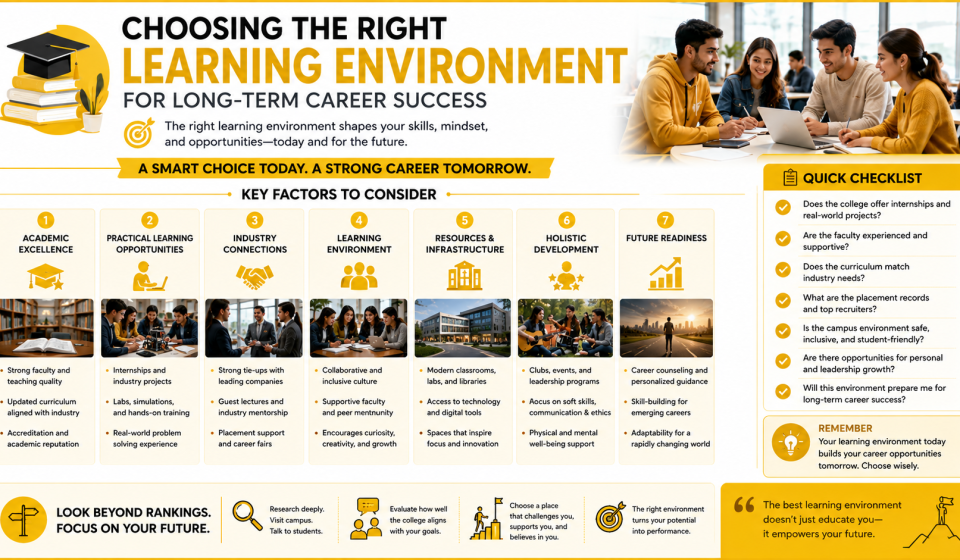
Questions to Ask Before Choosing a College
Before taking admission, ask:
- How interactive are the classrooms?
- Are internships integrated into the curriculum?
- What career support services are available?
- How experienced are the faculty members?
- Does the college encourage research and innovation?
- What opportunities exist for leadership and extracurricular involvement?
The answers will help you identify the right learning environment.
Source
https://www.education.gov.in
https://www.ugc.gov.in
https://www.aicte-india.org
https://www.nirfindia.org
https://www.nsdcindia.org
Conclusion
Choosing the right learning environment is one of the most important decisions for achieving long-term career success. A college that combines high-quality teaching, experienced faculty, practical learning opportunities, strong industry exposure, modern technology, academic support services, research facilities, career guidance, and an inclusive campus culture equips students with the knowledge, skills, and confidence needed to thrive in today’s competitive world. Rather than selecting a college based only on rankings or popularity, students should carefully evaluate how effectively an institution supports academic excellence, personal development, and professional growth. A positive learning environment lays the foundation for lifelong learning, greater employability, and sustained career achievement.
FAQ
1. Why is the learning environment important for career success?
A positive learning environment develops academic knowledge, practical skills, confidence, communication, leadership, and adaptability, all of which are essential for long-term career growth.
2. What factors define a good learning environment in college?
Key factors include experienced faculty, modern teaching methods, academic support services, industry exposure, internships, research opportunities, technology integration, campus culture, and career guidance.
3. How does practical learning improve employability?
Practical learning through laboratories, projects, internships, and industrial visits helps students apply theoretical knowledge, gain workplace experience, and build job-ready skills.
4. Why should students consider industry exposure before admission?
Industry exposure connects students with employers, provides real-world experience, improves networking opportunities, and increases placement potential after graduation.
5. How does technology improve the learning experience?
Technology enables smart classrooms, online learning, virtual labs, digital assessments, AI-assisted education, and flexible access to academic resources.
6. Why are extracurricular activities valuable?
Extracurricular activities develop leadership, teamwork, communication, creativity, networking, and time-management skills that complement classroom education.
7. What role does career guidance play in higher education?
Career guidance helps students explore career options, prepare professional resumes, improve interview performance, secure internships, and achieve better placement outcomes.
8. How can students choose the right college for long-term success?
Students should compare colleges based on teaching quality, faculty expertise, learning environment, academic support, internships, research opportunities, placement records, industry partnerships, campus culture, and alignment with their personal career goals instead of relying solely on rankings or popularity.