Choosing the Right College Based on Your Personality and Career Goals: A Complete Guide for Future Success

Selecting the right college is one of the most important decisions a student will make. While many students focus primarily on rankings, tuition fees, or popular courses, the most successful college choices are often based on a deeper understanding of personality, interests, strengths, and long-term career goals.
With thousands of colleges and universities offering diverse academic programs, choosing the right institution can feel overwhelming. However, when students align their personality traits and career aspirations with the right college environment, they are more likely to excel academically, enjoy their college experience, and achieve their professional goals.
Why Choosing the Right College Matters
A college plays a crucial role in shaping a student’s future. The institution you choose influences your educational experience, skill development, social interactions, internship opportunities, and career prospects.
Many students select colleges based on external factors such as prestige or peer recommendations. While these factors can be important, they do not guarantee personal satisfaction or academic success. A college that aligns with your personality and career ambitions is more likely to provide a supportive environment where you can thrive.
Choosing the right college can lead to:
- Higher academic performance.
- Increased student engagement.
- Better mental and emotional well-being.
- Stronger career preparation.
- Greater satisfaction with educational choices.
- Improved employment opportunities after graduation.
Understanding Your Personality Before Choosing a College
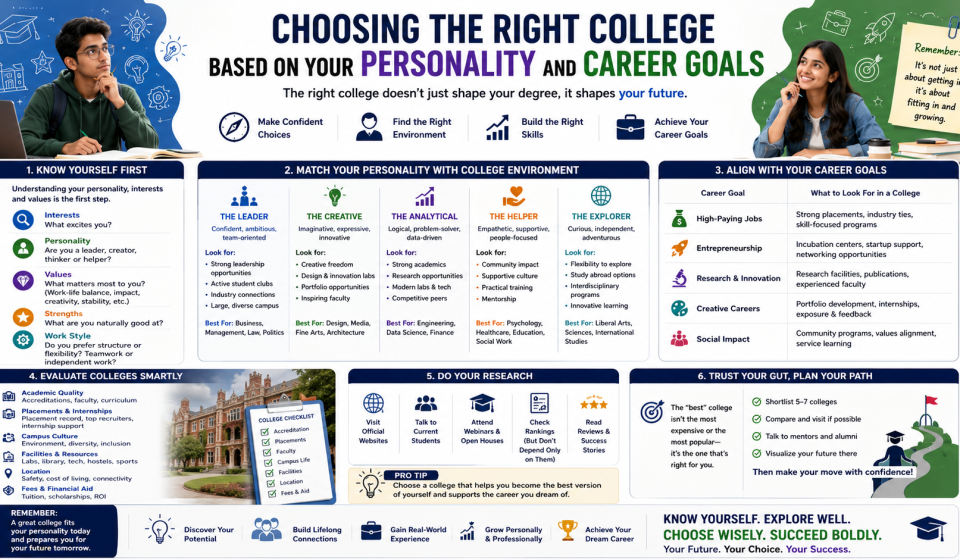
Before researching colleges, students should first understand themselves. Personality plays a significant role in determining which learning environments and campus cultures will feel most comfortable and productive.
Ask yourself important questions:
- Do you enjoy large social environments or smaller communities?
- Are you independent or do you prefer structured guidance?
- Do you enjoy teamwork or individual projects?
- Are you creative, analytical, or entrepreneurial?
- Do you thrive in competitive settings or collaborative environments?
Understanding these characteristics helps narrow down college options that match your natural preferences.
Personality Types and College Environments
Different colleges offer different cultures and experiences. Matching your personality with the right environment can significantly improve your college journey.
The Social and Outgoing Student
Students who enjoy meeting new people, participating in activities, and building large networks often thrive in larger universities with active campus communities.
Ideal characteristics include:
- Large student populations.
- Extensive extracurricular programs.
- Networking opportunities.
- Active student organizations.
- Diverse campus cultures.
These environments provide numerous opportunities for leadership, social engagement, and professional networking.
The Independent Learner
Some students prefer self-directed learning and personal responsibility. These individuals often excel in institutions that encourage research, innovation, and independent thinking.
Ideal characteristics include:
- Flexible academic programs.
- Research opportunities.
- Independent study options.
- Entrepreneurial support.
- Self-paced learning environments.
Such colleges allow students to explore interests deeply while developing problem-solving skills.
The Creative Thinker
Creative students often seek environments that encourage innovation, artistic expression, and experimentation.
Ideal college features include:
- Strong arts and design programs.
- Collaborative projects.
- Creative workshops.
- Innovation labs.
- Diverse cultural activities.
Creative individuals benefit from institutions that value imagination and originality.
The Analytical Problem Solver
Students who enjoy logic, mathematics, science, and technology often perform well in colleges known for rigorous academics and technical education.
Suitable environments include:
- STEM-focused institutions.
- Research-intensive universities.
- Engineering and technology programs.
- Advanced laboratory facilities.
- Industry partnerships.
These colleges provide opportunities to develop technical expertise and analytical skills.
Aligning College Selection with Career Goals
Personality is only one part of the decision-making process. Career aspirations should also guide college selection.
Students should identify their long-term goals before evaluating institutions.
Questions to consider include:
- What career do I want to pursue?
- What qualifications are required?
- Which colleges have strong programs in my chosen field?
- What internships and career services are available?
- Does the college have industry connections?
Aligning educational choices with career objectives helps students maximize future opportunities.
Choosing a College for Business and Entrepreneurship Careers
Students interested in business, management, finance, or entrepreneurship should evaluate colleges based on practical learning opportunities.
Important factors include:
- Business school reputation.
- Startup incubators.
- Industry partnerships.
- Internship programs.
- Networking events.
- Leadership development initiatives.
Hands-on experience is essential for success in business-related fields.
Choosing a College for Technology Careers
Technology careers continue to experience rapid growth across industries. Students pursuing careers in software development, cybersecurity, artificial intelligence, or data science should focus on colleges with strong technical programs.
Look for:
- Modern technology labs.
- Industry certifications.
- Internship opportunities.
- Research projects.
- Partnerships with technology companies.
- Innovation centers.
Technology-focused colleges prepare students for competitive and evolving job markets.
Choosing a College for Healthcare Careers
Healthcare careers require rigorous academic preparation and practical experience.
Students interested in medicine, nursing, pharmacy, or public health should consider:
- Accreditation status.
- Clinical training opportunities.
- Hospital partnerships.
- Laboratory facilities.
- Research opportunities.
- Graduate placement rates.
Strong healthcare programs provide valuable hands-on experience before entering professional practice.
Choosing a College for Creative Careers
Creative careers such as graphic design, animation, media production, journalism, and performing arts require specialized resources and mentorship.
Students should evaluate:
- Portfolio development opportunities.
- Industry-connected faculty.
- Creative facilities and studios.
- Internship programs.
- Alumni success stories.
- Exhibition and performance opportunities.
Creative institutions help students build professional portfolios and industry connections.
Campus Culture and Student Experience
Academic programs are important, but campus culture significantly affects student satisfaction.
Students should consider:
- Campus diversity.
- Student organizations.
- Social atmosphere.
- Support services.
- Mental health resources.
- Community engagement opportunities.
A positive campus experience contributes to both personal growth and academic achievement.
Location Matters More Than You Think
The location of a college influences lifestyle, career opportunities, and educational experiences.
Urban colleges often provide:
- Internship access.
- Industry networking.
- Diverse cultural experiences.
- Employment opportunities.
Suburban and rural colleges may offer:
- Smaller class sizes.
- Stronger community connections.
- Lower living expenses.
- Focused learning environments.
Students should choose locations that align with their preferences and goals.
Evaluating Academic Resources
A quality education depends heavily on available resources.
Important considerations include:
- Faculty expertise.
- Research facilities.
- Library resources.
- Technology infrastructure.
- Academic advising.
- Career development centers.
Strong academic support systems contribute to student success throughout college.
The Importance of Internship Opportunities
Internships bridge the gap between education and employment. Students should prioritize colleges that offer strong internship programs.
Benefits include:
- Real-world experience.
- Professional networking.
- Skill development.
- Career exploration.
- Improved employability.
Employers increasingly value practical experience alongside academic qualifications.
Financial Considerations
College affordability is a critical factor in decision-making.
Students should evaluate:
- Tuition costs.
- Scholarships.
- Financial aid programs.
- Living expenses.
- Return on investment.
The most expensive college is not always the best choice. Students should seek institutions that provide strong value for their investment.
Leveraging Career Services and Alumni Networks
Strong career services departments help students transition successfully into the workforce.
Look for colleges that offer:
- Career counseling.
- Resume support.
- Interview preparation.
- Job placement assistance.
- Employer networking events.
Additionally, active alumni networks can provide mentorship, internships, and career opportunities long after graduation.
Common Mistakes Students Should Avoid
Many students make avoidable mistakes when selecting colleges.
Common errors include:
- Following friends instead of personal goals.
- Choosing based solely on rankings.
- Ignoring campus culture.
- Overlooking financial factors.
- Failing to research career outcomes.
- Selecting programs without considering future demand.
Avoiding these mistakes can lead to better educational and career decisions.
How Technology Is Simplifying College Selection
Modern technology platforms are making college selection easier than ever. Students can use digital tools to compare institutions, explore programs, assess career outcomes, and receive personalized recommendations.
These tools help students make informed decisions based on data rather than assumptions.
As technology continues to evolve, students have access to more information and guidance than any previous generation.
Source
https://www.collegeboard.org
https://www.oecd.org
https://www.unesco.org
https://www.weforum.org
Conclusion
Choosing the right college is one of the most significant decisions a student can make. The best college is not necessarily the most famous or expensive—it is the institution that aligns with your personality, learning style, interests, and career goals. By understanding personal strengths, evaluating academic programs, considering campus culture, and focusing on long-term career aspirations, students can make informed decisions that support future success. A thoughtful college selection process lays the foundation for academic achievement, personal growth, and a rewarding professional journey.
FAQ
Why is personality important when choosing a college?
Personality influences learning preferences, social interactions, and overall comfort within a college environment. Choosing a college that matches your personality can improve academic success and student satisfaction.
How can I identify the right college for my career goals?
Research colleges that offer strong programs, internships, industry connections, and career services related to your desired profession.
Should college rankings be the most important factor?
No. Rankings can provide useful information, but students should also consider program quality, campus culture, affordability, and career outcomes.
How important are internship opportunities?
Internships provide practical experience, professional networking opportunities, and improved employability, making them an essential factor when choosing a college.
What role does campus culture play in student success?
Campus culture affects social experiences, mental well-being, engagement levels, and overall satisfaction throughout college.
How do alumni networks help students?
Alumni networks can offer mentorship, career guidance, internships, and employment opportunities that support long-term professional success.
Should I choose a college close to home?
The answer depends on personal preferences, financial considerations, and career goals. Some students thrive close to home, while others benefit from new environments.
What is the biggest mistake students make when choosing a college?
One of the most common mistakes is selecting a college based on popularity or peer influence rather than personal interests, career objectives, and individual needs.