
Starting college is one of the most exciting and life-changing experiences in a student’s educational journey. Along with new opportunities come greater responsibilities, academic challenges, career decisions, and personal growth.
In today’s competitive world, earning a degree alone is no longer sufficient to guarantee career success. Students need clear academic planning, skill development, internship opportunities, career counselling, and access to educational resources that align with industry expectations. Academic advisors, faculty mentors, career counsellors, and student support services work together to help learners overcome obstacles, stay motivated, and achieve their full potential. By providing personalised advice and structured learning pathways, academic guidance empowers students to maximise their college experience while preparing them for lifelong learning and professional achievement. This article explores the vital role of academic guidance in college success and explains why every student should actively seek educational support throughout their academic journey.
Understanding Academic Guidance
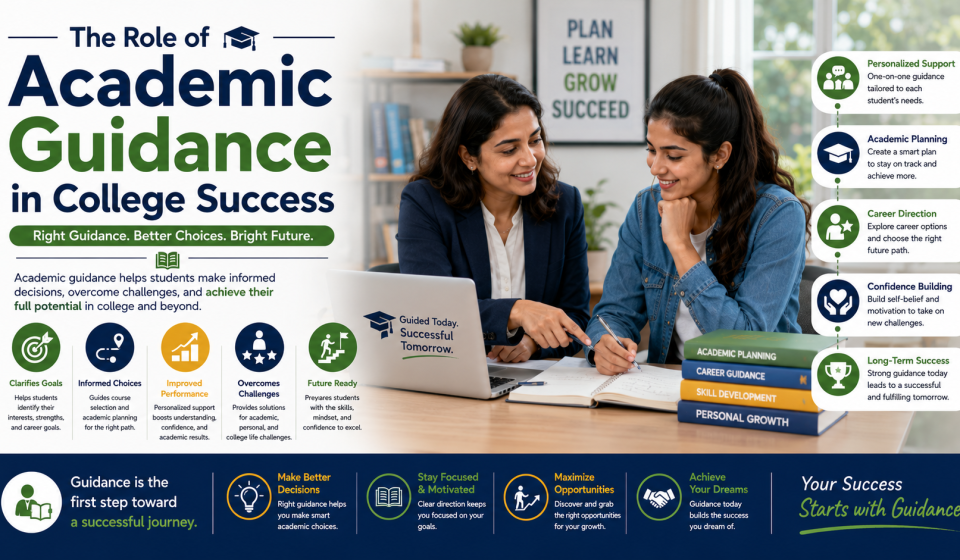
Academic guidance is a structured support system that helps students make informed educational decisions throughout their college experience. It involves academic advising, subject selection, study planning, career counselling, mentoring, skill development, and access to educational resources.
The primary objective of academic guidance is to help students achieve academic excellence while preparing for future employment, higher education, research opportunities, and personal development.
Rather than simply solving academic problems, effective guidance encourages students to become confident, independent, and lifelong learners.
Why Academic Guidance Is Important
College life introduces new academic expectations, increased independence, and more complex learning environments.
Students often face challenges such as choosing electives, understanding graduation requirements, improving study techniques, managing workloads, and exploring career options.
Academic guidance provides reliable support during these important decisions.
Students who receive consistent guidance are often better prepared to handle academic challenges while maintaining motivation and confidence throughout their studies.
Helping Students Choose the Right Courses
Selecting appropriate courses significantly influences future career opportunities.
Academic advisors help students understand programme requirements, prerequisite subjects, elective options, credit systems, and graduation pathways.
Proper course selection ensures students develop knowledge and skills that align with their academic interests and career goals.
Well-planned academic schedules also reduce unnecessary delays in completing degree programmes.
Improving Academic Performance
Many students struggle with time management, study techniques, note-taking, examination preparation, and assignment planning.
Academic guidance introduces effective learning strategies that improve understanding and academic performance.
Students learn how to organise study schedules, prepare efficiently for assessments, set realistic goals, and monitor their progress.
Consistent academic support encourages continuous improvement rather than last-minute preparation.
Supporting Career Planning
Career planning should begin during college rather than after graduation.
Academic advisors and career counsellors help students explore industries, identify strengths, understand labour market trends, and select suitable career paths.
Students receive guidance on internships, certifications, research opportunities, higher education, entrepreneurship, and professional development.
Early career planning enables students to build relevant skills before entering the job market.
Building Effective Study Habits
Successful students often develop disciplined study routines.
Academic guidance encourages active learning techniques such as summarising information, practising retrieval, participating in discussions, creating revision schedules, and reviewing progress regularly.
Good study habits improve long-term knowledge retention while reducing examination stress.
Students who learn effective learning methods become more confident and independent learners.
Encouraging Time Management
Balancing lectures, assignments, projects, examinations, internships, extracurricular activities, and personal responsibilities requires excellent time management.
Academic advisors teach students how to prioritise tasks, create realistic schedules, avoid procrastination, and maintain healthy routines.
Strong organisational skills reduce stress while improving academic productivity.
Time management remains valuable throughout professional careers.
Providing Personalised Learning Support
Every student learns differently.
Some require additional academic assistance, while others seek advanced learning opportunities.
Academic guidance provides personalised support based on individual strengths, learning styles, career aspirations, and academic challenges.
Personalised advising helps students overcome obstacles more effectively than general academic recommendations.
Helping Students Overcome Academic Challenges
Difficult subjects, low grades, lack of confidence, language barriers, and adjustment issues can affect student performance.
Academic advisors identify these challenges early and recommend tutoring, mentoring, workshops, study groups, counselling, or additional learning resources.
Early intervention prevents minor academic difficulties from becoming long-term problems.
Supportive guidance helps students remain motivated despite setbacks.
Promoting Critical Thinking
Higher education encourages students to analyse information rather than simply memorise facts.
Academic mentors challenge learners to evaluate evidence, question assumptions, solve complex problems, and develop independent opinions.
Critical thinking improves decision-making while preparing students for professional responsibilities.
Employers consistently value graduates who can analyse situations logically and recommend practical solutions.
Developing Communication Skills
Academic success requires effective communication.
Students regularly prepare presentations, reports, research papers, group discussions, and project documentation.
Academic guidance helps improve writing, public speaking, presentation skills, academic communication, and professional etiquette.
Strong communication abilities support both educational achievement and career advancement.
Encouraging Research and Innovation
Many colleges encourage students to participate in research activities, innovation competitions, conferences, and academic publications.
Academic advisors help students identify research opportunities aligned with their interests.
Research participation strengthens analytical thinking, creativity, technical knowledge, and problem-solving abilities.
It also enhances applications for postgraduate education and research careers.
Supporting Mental and Emotional Well-Being
College life can become emotionally demanding.
Academic pressure, financial concerns, personal responsibilities, social adjustment, and future uncertainty may affect student well-being.
Academic guidance often works alongside counselling services to provide emotional support, stress management strategies, and referrals when necessary.
Healthy emotional well-being improves concentration, motivation, and academic performance.
Preparing Students for Professional Careers
Academic guidance extends beyond graduation requirements.
Students receive assistance with resume writing, interview preparation, internship applications, networking opportunities, career fairs, and professional development workshops.
These services improve employability while helping students understand workplace expectations.
Graduates who actively seek guidance often enter the workforce with greater confidence.
Building Leadership Skills
Leadership opportunities frequently emerge through student organisations, academic projects, volunteer activities, and campus events.
Academic mentors encourage students to participate in extracurricular activities that strengthen leadership, teamwork, communication, and organisational abilities.
Leadership experiences contribute significantly to career success.
Employers appreciate graduates who demonstrate initiative beyond academic achievements.
Encouraging Lifelong Learning
Education does not end after earning a degree.
Academic guidance promotes curiosity, continuous skill development, professional certifications, online learning, research participation, and lifelong education.
Students develop a mindset focused on continuous improvement rather than short-term academic achievement.
This approach helps professionals remain competitive throughout changing careers.
Strengthening Student Confidence
Confidence grows when students understand their abilities and receive constructive support.
Academic advisors celebrate achievements, encourage realistic goal setting, provide practical feedback, and help students recognise their progress.
Confident students participate more actively in class, pursue leadership opportunities, and perform better during interviews.
Positive guidance creates resilient learners prepared for future challenges.
Supporting Students During Career Transitions
Academic guidance remains valuable when students prepare for internships, higher education, competitive examinations, entrepreneurship, or employment.
Career planning, professional networking, graduate school preparation, and job application support help students transition smoothly from education to professional life.
Guidance ensures students make informed decisions during important career milestones.
Making the Most of Academic Guidance
Students benefit most when they actively engage with available support services.
Meeting academic advisors regularly, asking questions, seeking feedback, attending workshops, exploring internships, discussing career goals, and maintaining open communication create stronger educational outcomes.
Academic guidance works best as an ongoing partnership rather than occasional assistance during academic difficulties.
Students who seek guidance proactively often experience greater academic success and career readiness.
Long-Term Benefits of Academic Guidance
The positive impact of academic guidance extends far beyond graduation.
Students develop stronger academic performance, better decision-making abilities, improved confidence, practical career skills, lifelong learning habits, professional networks, leadership qualities, and emotional resilience.
These benefits contribute not only to successful careers but also to personal fulfilment and continuous professional growth.
Investing time in academic guidance is ultimately an investment in a brighter future.
Source
https://www.unesco.org
https://www.naceweb.org
https://hbr.org
https://www.oecd.org/education
Conclusion
Academic guidance plays a fundamental role in helping students achieve success throughout their college journey and beyond. From selecting the right courses and improving study habits to planning careers, developing leadership skills, managing time effectively, and preparing for employment, academic guidance provides the support students need to reach their full potential. By working closely with academic advisors, faculty mentors, career counsellors, and campus support services, students gain the confidence, knowledge, and practical skills required to excel in both academic and professional environments. Those who actively seek academic guidance not only perform better during college but also build a strong foundation for lifelong learning, career advancement, and personal growth.
FAQ
1. What is academic guidance in college?
Academic guidance is a support system that helps students with course selection, study planning, career advice, skill development, academic success, and personal growth throughout college.
2. Why is academic guidance important for students?
It helps students improve academic performance, make informed educational decisions, prepare for careers, develop effective study habits, and overcome academic challenges.
3. Who provides academic guidance in colleges?
Academic guidance is usually provided by faculty advisors, academic counsellors, career centres, mentors, student support offices, and educational specialists.
4. How does academic guidance improve career readiness?
Academic guidance helps students choose relevant courses, gain internship experience, build professional skills, prepare resumes, practise interviews, and explore career opportunities.
5. How can students benefit the most from academic guidance?
Students should regularly meet advisors, ask questions, seek feedback, attend workshops, participate in internships, explore campus resources, and plan their academic and career goals early.