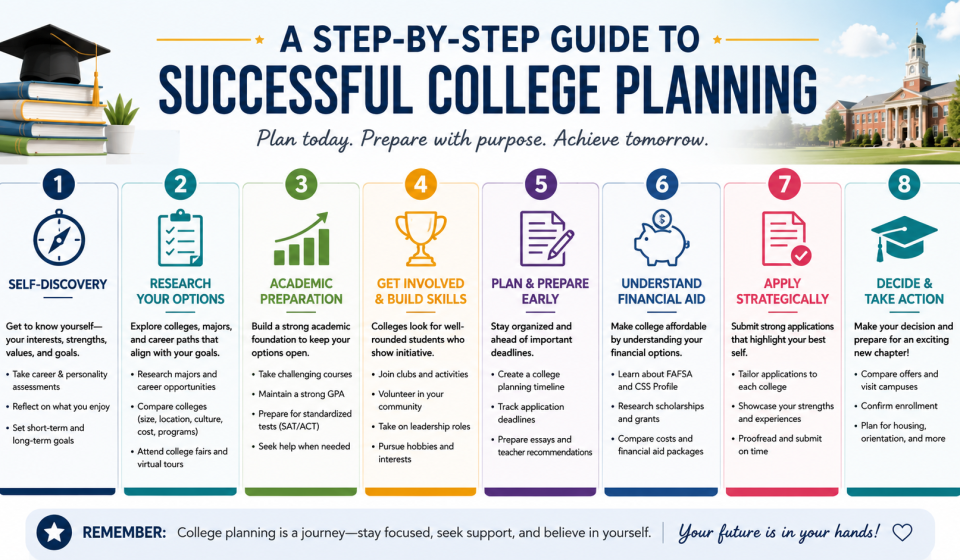
A Step-by-Step Guide to Successful College Planning: Your Ultimate Roadmap to Academic Success

Choosing the right college and planning your educational journey is one of the most important decisions in a student’s life. Successful college planning is not just about selecting a university; it involves setting clear goals, understanding admission.
Why College Planning Matters
College planning helps students make informed decisions about their future. Without a proper plan, students may face challenges such as selecting the wrong course, financial difficulties, missed application deadlines, or limited career opportunities.
Benefits of effective college planning include:
- Better academic preparation
- Increased admission chances
- Improved financial management
- Reduced stress during application season
- Clear career direction
- Access to scholarships and grants
Step 1: Define Your Academic and Career Goals
The first step in college planning is understanding your interests, strengths, and career aspirations.
Ask yourself:
- What subjects do I enjoy studying?
- What are my strengths and talents?
- What career path interests me?
- Do I want to pursue higher education after graduation?
Research different careers and identify the educational qualifications required. Having clear goals will help narrow down your college and program choices.
Step 2: Research Colleges and Universities
Once you have identified your goals, start researching colleges that offer programs aligned with your interests.
Consider factors such as:
Academic Programs
Look for institutions that provide strong programs in your desired field.
Location
Decide whether you prefer studying close to home, in another state, or internationally.
Campus Environment
Consider class size, campus culture, extracurricular activities, and student support services.
Accreditation
Ensure the college is accredited and recognized by relevant educational authorities.
Graduation and Employment Rates
Review statistics related to student success and job placement.
Create a list of colleges categorized as:
- Dream Schools
- Target Schools
- Safety Schools
This approach increases your chances of receiving multiple admission offers.
Step 3: Understand Admission Requirements
Every college has unique admission criteria. Carefully review the requirements of each institution.
Common requirements include:
- Academic transcripts
- Standardized test scores
- Personal statement or essay
- Letters of recommendation
- Extracurricular achievements
- Portfolio (for specific programs)
Create a checklist for each college and track deadlines to avoid missing important dates.
Step 4: Focus on Academic Excellence
Strong academic performance remains one of the most important factors in college admissions.
To improve your academic profile:
- Maintain a high GPA
- Take challenging courses when possible
- Develop strong study habits
- Seek help when struggling with subjects
- Participate actively in classroom discussions
Colleges often look for students who demonstrate consistent academic commitment and growth.
Step 5: Build a Strong Extracurricular Profile
Admissions officers evaluate more than grades.
Participating in extracurricular activities demonstrates leadership, teamwork, and commitment.
Examples include:
- Sports
- Student government
- Volunteer work
- Community service
- Music and arts
- Debate clubs
- Coding competitions
- Entrepreneurship projects
Focus on quality rather than quantity. Long-term involvement in meaningful activities often has a greater impact.
Step 6: Prepare for Standardized Tests
Many colleges consider standardized test scores during admissions.
Preparation strategies include:
- Taking practice exams
- Creating a study schedule
- Using online learning resources
- Attending preparation classes if needed
- Reviewing weak subject areas
Start preparing early to allow time for retakes if necessary.
Step 7: Create an Impressive College Resume
A college resume highlights your achievements and experiences.
Include:
- Academic accomplishments
- Awards and honors
- Leadership positions
- Volunteer work
- Internships
- Special skills
- Certifications
A well-organized resume can strengthen applications and scholarship opportunities.
Step 8: Write a Compelling Personal Statement
Your personal statement allows colleges to understand who you are beyond grades and test scores.
Tips for writing a strong essay:
- Tell your unique story
- Be authentic and honest
- Highlight personal growth
- Demonstrate passion and motivation
- Avoid clichés
- Proofread carefully
A compelling essay can significantly influence admission decisions.
Step 9: Secure Strong Letters of Recommendation
Recommendation letters provide valuable insight into your character and abilities.
Choose recommenders who:
- Know you well
- Can discuss your strengths
- Have observed your academic performance
- Can provide specific examples of your achievements
Request recommendations early and provide necessary information to help them write detailed letters.
Step 10: Develop a Financial Plan
College education can be expensive, making financial planning essential.
Estimate:
- Tuition fees
- Housing costs
- Meal plans
- Transportation expenses
- Books and supplies
- Personal expenses
Understanding total costs helps families make informed decisions.
Step 11: Explore Scholarships and Financial Aid
Scholarships can significantly reduce educational expenses.
Sources include:
- Government programs
- Private organizations
- Educational foundations
- Community groups
- Corporate sponsorships
Apply to multiple scholarship opportunities and pay close attention to deadlines.
Additionally, complete all required financial aid forms to maximize available assistance.
Step 12: Visit College Campuses
Whenever possible, visit campuses before making a final decision.
During visits:
- Attend information sessions
- Tour academic facilities
- Meet current students
- Speak with faculty members
- Explore residence halls
Campus visits provide valuable insights that websites and brochures cannot fully capture.
Step 13: Stay Organized Throughout the Process
College planning involves many deadlines and documents.
Use:
- Digital calendars
- Application tracking spreadsheets
- Task management apps
- Dedicated folders for important documents
Organization reduces stress and helps ensure nothing is overlooked.
Step 14: Submit Applications Early
Submitting applications early offers several advantages:
- Reduced last-minute stress
- More time to correct errors
- Better scholarship consideration
- Demonstrates strong interest
Review all application materials carefully before submission.
Step 15: Evaluate Admission Offers Carefully
Receiving multiple acceptance letters is exciting, but careful evaluation is important.
Compare:
- Academic programs
- Financial aid packages
- Campus environment
- Internship opportunities
- Career placement services
- Graduation rates
Select the institution that best aligns with your long-term goals.
Step 16: Prepare for College Life
After choosing a college, begin preparing for the transition.
Important steps include:
- Registering for classes
- Arranging housing
- Completing orientation programs
- Learning time management skills
- Setting academic goals
Being prepared can make your first year significantly more successful.
Common College Planning Mistakes to Avoid
Students often make avoidable mistakes during the planning process.
These include:
- Starting too late
- Missing deadlines
- Ignoring financial planning
- Applying to too few colleges
- Choosing a college solely based on rankings
- Neglecting scholarship opportunities
- Submitting generic application essays
Avoiding these mistakes can improve your college experience and outcomes.
Source Links
https://studentaid.gov
https://www.collegeboard.org
https://www.nacacnet.org
https://educationusa.state.gov
https://bigfuture.collegeboard.org
Conclusion
Successful college planning is a journey that requires careful preparation, research, and organization. By defining clear goals, researching colleges, maintaining strong academic performance, building extracurricular experiences, planning finances, and staying organized, students can make informed decisions that support both their educational and career aspirations. Starting early and following a structured approach will not only increase admission opportunities but also create a solid foundation for future success. Remember, the college you choose can shape your personal and professional development, so invest the time and effort needed to make the best decision for your future.
FAQ
1. When should students start college planning?
Students should ideally begin college planning during their freshman or sophomore year of high school to maximize opportunities and preparation time.
2. How many colleges should I apply to?
Most experts recommend applying to 6–10 colleges, including dream, target, and safety schools.
3. Why are extracurricular activities important for college admissions?
They demonstrate leadership, commitment, teamwork, and personal development beyond academics.
4. How can I reduce college expenses?
Apply for scholarships, grants, financial aid, and consider in-state or community college options.
5. Are college rankings the most important factor?
No. Academic programs, affordability, campus culture, and career opportunities are often more important than rankings alone.
6. What should be included in a personal statement?
A personal statement should highlight your experiences, achievements, goals, values, and unique story.
7. How can I improve my chances of admission?
Maintain strong grades, participate in extracurricular activities, prepare for tests, and submit well-crafted application materials.
8. Is financial aid available for international students?
Many universities offer scholarships and aid programs specifically for international applicants, though availability varies by institution.